







Fake Tax Refund Messages: How to Spot Tax Refund Scams and Avoid Identity Theft
Feb. 10, 2026

Fake tax refund messages are one of the most common scams during tax season. Criminals impersonate tax authorities to trick individuals into sharing personal and financial information. Knowing how these scams work can help you avoid tax refund fraud and identity theft.
What Are Fake Tax Refund Messages?
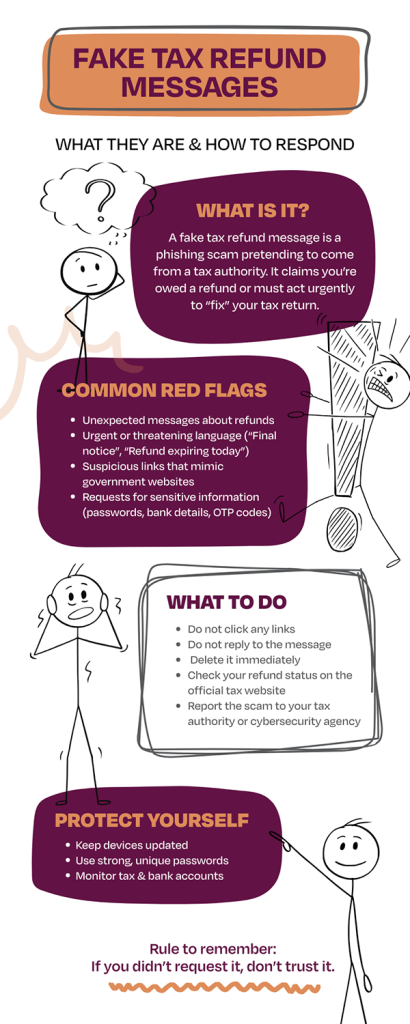
Fake tax refund messages are phishing scams sent by SMS, email, or messaging apps. They claim you are owed a tax refund or that there is a problem with your tax return. These messages often include malicious links that lead to fake government websites designed to steal sensitive data.
Common Examples of Tax Refund Scams
Scammers often use messages like:
- “You are eligible for a tax refund. Click here to claim.”
- “Tax refund pending. Verify your information immediately.”
- “Final notice: your tax refund will expire today.”
If you receive any of these, it is likely a tax refund phishing scam.
How to Identify Fake Tax Refund Messages (Key Warning Signs)
- Unsolicited Contact. Tax authorities do not contact taxpayers by text message or social media about refunds.
- Urgency and Fear Tactics. Scammers pressure victims with deadlines or threats to force quick action.
- Fake or Suspicious Links. Fraudulent links often resemble official government websites but use incorrect domains or spelling errors.
- Requests for Personal or Financial Information. Legitimate tax agencies never ask for passwords, PINs, or banking details via email or SMS.
What To Do If You Receive a Fake Tax Refund Message
- Do not click any links
- Do not reply to the message
- Delete the message immediately
- Visit your tax authority’s official website directly (do not use links)
- Report the scam to the relevant tax authority or cybersecurity agency
Frequently Asked Questions (FAQ)
Do tax authorities send text messages about refunds?
No. Tax authorities do not contact individuals via SMS or social media regarding tax refunds.
How do I check my real tax refund status?
Always check by logging directly into the official tax authority website or contacting them through verified phone numbers.
Fake tax refund messages are designed to exploit urgency and trust. Staying informed is the best defense against tax refund scams, phishing attacks, and identity theft.
When in doubt, don’t click—verify directly.

Back-to-School Giveaway 2026
Community
Aug 3, 2026

Don't Let Fake School Supply Deals Drain Your Wallet
Scam Alerts
July 21, 2026