







Don't Let Fake School Supply Deals Drain Your Wallet
July 21, 2026

Back-to-school shopping can get expensive, and scammers know it. Every year, fake online stores, phony social media ads, and “too-good-to-be-true” discounts pop up, hoping stressed parents, college students, and teachers will click before thinking twice.
A “70% off laptop,” “$5 backpack sale,” or “free school supplies—just pay shipping” might sound like the deal of the year. Unfortunately, many of these offers are designed to steal your money, your personal information, or both.
Before you add anything to your cart, here’s how to shop smarter.
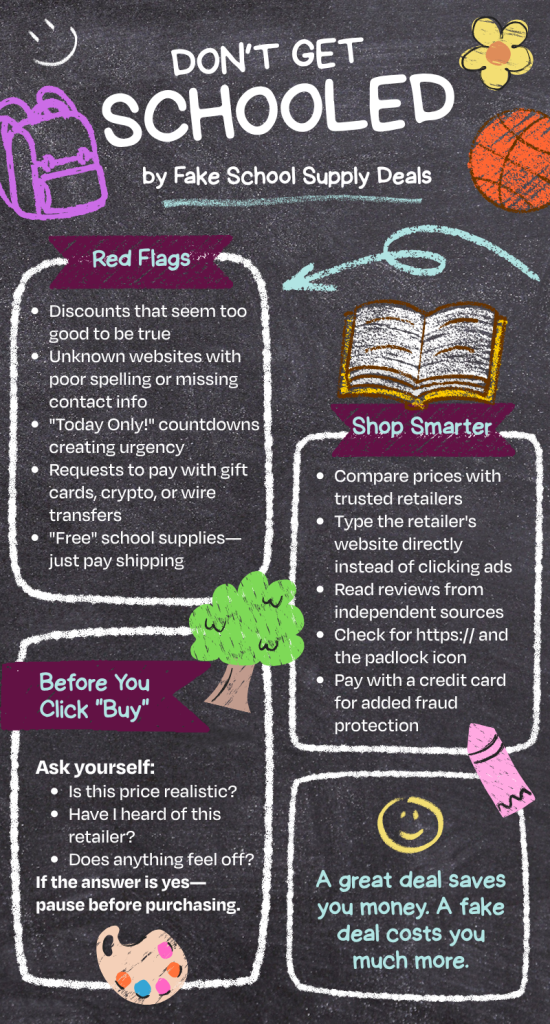
1. If the Discount Seems Impossible, It Probably Is
Who doesn’t love good sales? But there’s a difference between a seasonal promotion and an unbelievable bargain.
🚩 Red flags:
- Brand-name calculators or laptops for a fraction of their normal price
- “Everything must go!” sales with 80–90% off every item
- Premium backpacks or headphones are priced far below every other retailer
- Claims that inventory is “limited” but every product is available
Compare prices across several reputable retailers. If one website is dramatically cheaper than everyone else, there’s usually a reason.
2. Watch Out for Fake Social Media Ads
Scammers often pay for convincing ads on social media platforms, especially during back-to-school season.
The ad may feature:
- Popular school supply brands
- Countdown timers
- “Today Only!” messaging
- Fake customer comments
- Photos copied from legitimate retailers
Instead of clicking the ad, visit the retailer’s website directly by typing the web address yourself.
3. Check the Website Carefully
A scam website may look professional at first glance—but small details often give it away.
Look for:
- Misspelled company names or URLs
- Poor grammar or awkward wording
- Low-quality images
- Missing contact information
- No physical address
- No customer service phone number
If you’ve never heard of the retailer, spend a few minutes researching before buying.
4. Read Reviews—But Verify They’re Real
Five-star reviews aren’t always trustworthy.
Check reviews on:
- Independent review websites
- Search engines
- Community forums
- Social media
Warning signs include:
- Hundreds of reviews posted on the same day
- Nearly identical wording
- Only five-star ratings
- No negative feedback whatsoever
A mix of positive and negative reviews usually looks more authentic than perfection.
5. Be Careful with Payment Methods
One of the biggest warning signs is how a seller wants you to pay.
Avoid retailers that insist on:
- Gift cards
- Wire transfers
- Cryptocurrency
- Payment apps that don’t offer purchase protection
Using a credit card often provides stronger fraud protection if something goes wrong.
6. Don’t Fall for “Free” School Supply Offers
You’ve probably seen promotions that promise:
- “Free backpack!”
- “Free Chromebook!”
- “Free school supplies!”
…if you just pay for shipping or complete a survey.
These offers often collect your payment information, sign you up for recurring charges, or steal personal information without delivering the promised item.
Remember: “Free” isn’t always free.
7. Protect Your Personal Information
A legitimate retailer only needs information required to process your purchase.
Be cautious if a site asks for:
- Your Social Security number
- Banking login credentials
- One-time verification codes
- Excessive personal information unrelated to your purchase
If something feels off, stop the transaction immediately.
8. Shop with Trusted Retailers
When possible:
- Buy directly from established retailers or official brand websites.
- Stick with stores you’ve successfully used before.
- Use secure checkout pages (look for “https://” and the padlock icon).
- Keep receipts and order confirmations until your purchase arrives.
A few extra minutes of research can save hours of dealing with fraud.
What to Do If You Think You’ve Been Scammed
If you believe you’ve made a purchase from a fake website:
- Contact your financial institution immediately to report the transaction.
- Freeze or lock your card if necessary.
- Change any passwords you used on the scam site.
- Monitor your account for unauthorized charges.
- Report the scam to the appropriate consumer protection agencies.
The sooner you act, the better your chances of limiting financial loss.
Final Bell: Shop Smart This School Year
Back-to-school shopping should help you prepare for a successful year—not create financial headaches. Taking a few moments to verify a deal, research a retailer, and use secure payment methods can help protect both your money and your personal information.
When it comes to online bargains, trust your instincts. If a deal feels too good to be true, it probably is.

Scary Good Deal—or Just Scary?
Scam Alerts
Sept. 22, 2026

Your Portland Passport to National Hispanic Heritage Month
Community
Sept. 8, 2026