







Graduation Is Over. Now the Real Adulting Begins.
July 7, 2026

Your 30-Day Money Game Plan for Life After College
For years, life followed a schedule.
Classes. Finals. Summer break.
Now? Your calendar is suddenly…empty.
Whether you’ve accepted your first job offer, you’re interviewing every week, or you’re still figuring out what’s next, graduation comes with a reality check:
Nobody hands you a guide for managing your money.
The first few months after graduation are less about making a lot of money and more about building habits that make your future easier. Here’s a practical game plan for your first month of adult life.
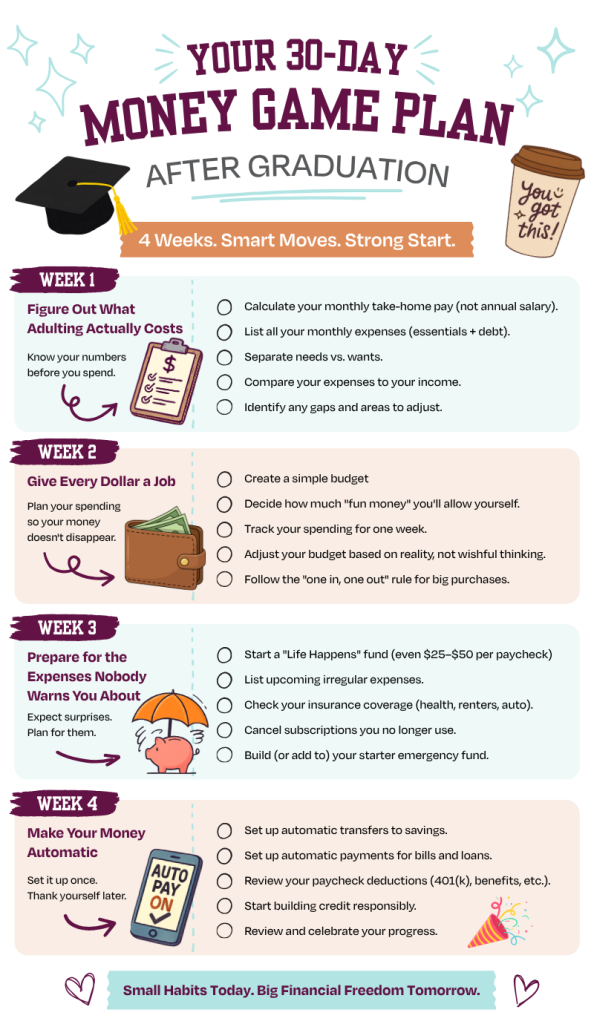
Week 1: Figure Out What Adulting Actually Costs
Your salary isn’t the same as your spending money.
Before buying new furniture or celebrating every weekend, calculate your monthly essentials.
Include things like:
- Rent
- Utilities
- Internet
- Cell phone
- Groceries
- Gas or transit
- Car insurance
- Streaming subscriptions
- Student loan payments (if applicable)
Now compare that total to your monthly take-home pay—not your annual salary.
Many new graduates are surprised by how much disappears before they even have money for fun.
Reality check: If you don’t know your monthly cost of living, it’s almost impossible to make smart financial decisions.
Week 2: Give Every Dollar a Job
Once you know your expenses, create a simple spending plan.
Instead of asking, “Can I afford this?”
Ask:
“What money is this replacing?”
For example:
- Friday night dinner out = one week’s grocery budget
- New shoes = part of next month’s rent savings
- Weekend trip = delaying your emergency fund
This doesn’t mean saying no to everything—it means making intentional choices.
A simple budget could look like:
✅ Bills and essentials
✅ Savings
✅ Transportation
✅ Fun money
Once the fun money is gone, you’re done spending until the next paycheck.
No guilt. No guessing.
Week 3: Prepare for the Expenses Nobody Warns You About
Adult life comes with surprise costs.
Think:
- Car registration
- Wedding invitations
- Prescription refills
- Apartment deposits
- Work clothes
- Professional licenses
- Replacing a cracked phone screen
Instead of letting these derail your budget, start a small “life happens” category.
Even setting aside $25–50 per paycheck can make unexpected expenses much less stressful.
Week 4: Make Your Money Automatic
The fewer decisions you have to make every payday, the better.
Set up automatic transfers for:
- Savings
- Bills
- Loan payments
When your money moves automatically, you’re less likely to accidentally spend what you meant to save.
Future You will appreciate Present You.
Avoid the Biggest First-Year Money Mistakes
Comparing Your Life to Everyone Else’s
Social media can make it seem like everyone has:
- Luxury apartments
- Brand-new cars
- Weekly vacations
- Designer furniture
Remember: you don’t see their credit card balances.
Build your life based on your budget—not someone else’s highlight reel.
Learn Before You Borrow
Credit cards, auto loans, and financing can all be useful tools—but only when you understand how they work.
If you’re new to credit, start small and pay your balance in full each month. For more tips, check out our article on Build and Maintain an Excellent Credit Score.
Expect the Unexpected
An emergency fund doesn’t have to start with thousands of dollars.
Even your first $500 can help cover a flat tire, a medical bill, or an unexpected repair without relying on a credit card.
Want to build your safety net? Read our Guide to Financial Independence.
Stay Alert for Scams
Recent graduates are common targets for fake job offers, phishing emails, and “easy money” schemes.
If someone promises fast cash, asks for upfront payment, or pressures you to act immediately, pause and verify before responding.
Learn the warning signs in our article on How to Spot Get-Rich-Quick Schemes.
The Bottom Line
Graduation isn’t just the start of your career—it’s the start of managing your life.
You won’t have every answer during your first year after college, and that’s okay.
What matters most isn’t having a perfect budget or the highest-paying job. It’s building everyday habits that make paying bills, saving money, and handling surprises feel a little less overwhelming.
Because adulting isn’t about getting everything right.
It’s about getting a little better with every paycheck.

90 Years of You
News
Oct. 1, 2026

Scary Good Deal—or Just Scary?
Scam Alerts
Sept. 22, 2026